Specifications
| Property |
Product information |
| Company |
Hilma Biocare |
| Active substance |
Retatrutide |
| Development code |
LY-3437943 |
| Group |
Metabolic peptide |
| Class |
Triple receptor agonist |
| Receptor targets |
GLP-1, GIP and glucagon receptor (GCGR) |
| Form |
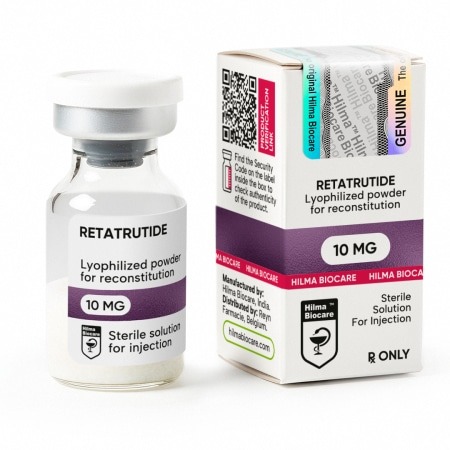
Lyophilized powder for reconstitution |
| Peptide structure |
39 amino acids, based on a GIP backbone |
| Enzyme resistance |
Resistant to DPP-4 cleavage |
| Research focus |
Obesity, weight management and type 2 diabetes |
What the third receptor adds
The glucagon receptor is the distinguishing part of retatrutide’s metabolic profile. Semaglutide acts on GLP-1 receptors, and tirzepatide combines GLP-1 with GIP activity. Retatrutide brings GCGR into that combination, linking appetite and insulin signalling with an additional pathway involved in energy expenditure.
This is the basis of its triple agonist classification. The three targets contribute different functions within one molecule, bringing food intake, glucose regulation and energy use into the same research approach to weight management.
Appetite, glucose regulation and energy use
GLP-1 signalling contributes to the feeling of fullness after eating. Together with GIP activity, it also influences the pancreatic insulin response. These effects connect reduced appetite with glucose control, which explains the interest in retatrutide for both obesity and type 2 diabetes.
GCGR activity adds a separate metabolic component associated with energy expenditure. Clinical research examines how these combined actions affect body weight and glycemic control alongside diet and exercise.
A GIP backbone with three receptor targets
Also known as LY-3437943, retatrutide contains 39 amino acids and is built on a GIP peptide backbone. Its structure is modified to produce activity at all three receptor targets.
The peptide resists cleavage by DPP-4, an enzyme that breaks down native GIP and GLP-1. This resistance is a feature of its molecular stability.
Vial presentation and clinical administration
Hilma Biocare supplies this presentation as lyophilized powder for reconstitution. The dry vial format requires preparation of a solution before injection.
Clinical study protocols use subcutaneous administration on a weekly schedule, with gradual dose escalation to manage nausea and other gastrointestinal effects. These are supervised research regimens, not an established self dosing schedule.
Health and usage information
This page provides educational information about the product to help you make informed choices. It does not replace medical advice. If you have a health condition or questions about dosage, consult a sports medicine doctor or another healthcare professional.

 Worldwide Delivery
 Payment
 Overview








Reviews
There are no reviews yet.